Internship Description
Brian Fitzgerald, ‘20BUS SIPA, interned with Think-it, a Tunisian engineering collective on a mission to unlock human potential with technology by developing and deploying high-caliber software engineers with innovative partner teams around the world. Think-it builds a holistic collective approach to distributed talent development and deployment to help companies rethink how to build high-performing technical teams. Brian worked with Think-it’s CEO to launch the company’s new Open Learning Community, which brings together learners, beginners and intermediate, from North Africa’s ecosystem of talented engineers and provides them access to a selection of learning modules through a blended learning approach.
My primary responsibilities consisted of 1) managing the formation and proposal submissions for Think-it’s Open Learning Community concept, which entails taking the most salient portions of Think-it’s technical bootcamp, currently reserved only for its own engineers, and creating online module versions that will become freely available to external software engineers; and 2) taking over project management responsibility for Think-it’s relationship with a Fortune 500 technology company with which Think-it is partnering to build out a cybersecurity curriculum that will eventually be incorporated into Think-it’s bootcamp and client work as well as the Open Learning Community.
Think-it is an engineering collective on a mission to unlock human potential with technology in North Africa by developing and deploying local software engineers with innovative partner teams around the world. It uses a data-driven approach to hire the top 5% of talented and values-driven software engineers in Tunisia and supports them in completing an intensive technical fellowship to deepen their tech stack expertise in Cloud and DevOps, Data Science and Machine Learning, and Full Stack Web Development. Think-it also focuses on the soft skills and self-confidence that make remote work successful, including proactive communication, adaptability, and self-management. The company’s technical team-building solutions—genuine integration of full-time, distributed developers as individuals or custom satellite teams (not outsourcing)—help companies think differently about how they assess, hire, and optimize their technical talent. My work over the summer helped to increase the depth and breadth of this core mission.
My internship was very much in line with my ambitions to work for a tech corporate whose mission aligns itself with the emerging overlap of technology with society and security. It also related to my language specialty by giving me additional exposure to Arabic dialects. The exposure to demanded skillsets and knowledge domains I’ve gained while at Columbia Business School and Columbia’s School of International and Public Affairs—international partnerships, corporate strategy, emerging technology domains, and political risk are all most applicable—were all selling points in Think-it’s decision to bring me on over the summer. To get into more specifics, the core Macroeconomics and Strategy Formulation courses at CBS prepared me to articulate Think-it’s remote work value-add to distant partners and to analyze client WTP and the strategic advantage of the planned Open Learning Community. My SIPA education allowed me to put Think-it’s mission into a regional context and contemplate on the strategic significance of the distributed employment market in North Africa.
My challenges mainly centered on the initial remote portion of the internship, during which time I worked from New York City while completing course requirements at Columbia Business School. Working remotely, while effective, is no substitute for in-person onboarding. Were I given a do-over, I would structure my internship so that the in-country portion of my employment occurred at the start of my internship tenure. This, I believe, would have given me a smoother onboarding experience and allowed for relationships with colleagues to cement themselves early in the summer as opposed to my last two weeks with the company.
The nature of a start-up could also be frustrating at times, though I fully expected to face some hiccups related to the company’s growing pains. At the start of the internship, my goals revolved entirely around fine-tuning Think-it’s Open Learning Community concept; however, as the weeks went on, more and more tasks were added to my plate, all of which competed for the limited attention I could give as a part-time, remote intern. While both I and my supervisor viewed my work with the company as a job well done, part of me thinks that doing an average job on a number of initiatives is less beneficial to Think-it than excelling at a single strategically important project would have been.
This internship confirmed for me that I do not want to work for a startup full-time. I do much better when fleshed out processes and procedures are already in place. If I were to start my own company in which I had 100 percent buy-in and believed in the mission completely, then a less structured environment would be acceptable. My time with Think-it also helped me widen the scope of my career search. I had primarily been focusing on companies affiliated with household names but during this internship I discovered additional companies that I would now consider working for.
I also learned that my professional strengths are partnership building and big picture analysis. In my short time with the firm this summer, I assisted in confirming new partnerships and tying two different initiatives together in effort to streamline a workforce already at capacity and expand Think-it’s funding opportunities. I also learned some things that I need to work on, such as organization and tailoring my prose to different audiences. My personal style of organization does not necessarily work well for others, which I need to learn to take into account. My writing experience has primarily also been geared towards pitching the merits of corporates, not underserved demographic target groups, which was a crucial distinction for the foundations targeted during my internship. Adapting my writing for this new audience was difficult.
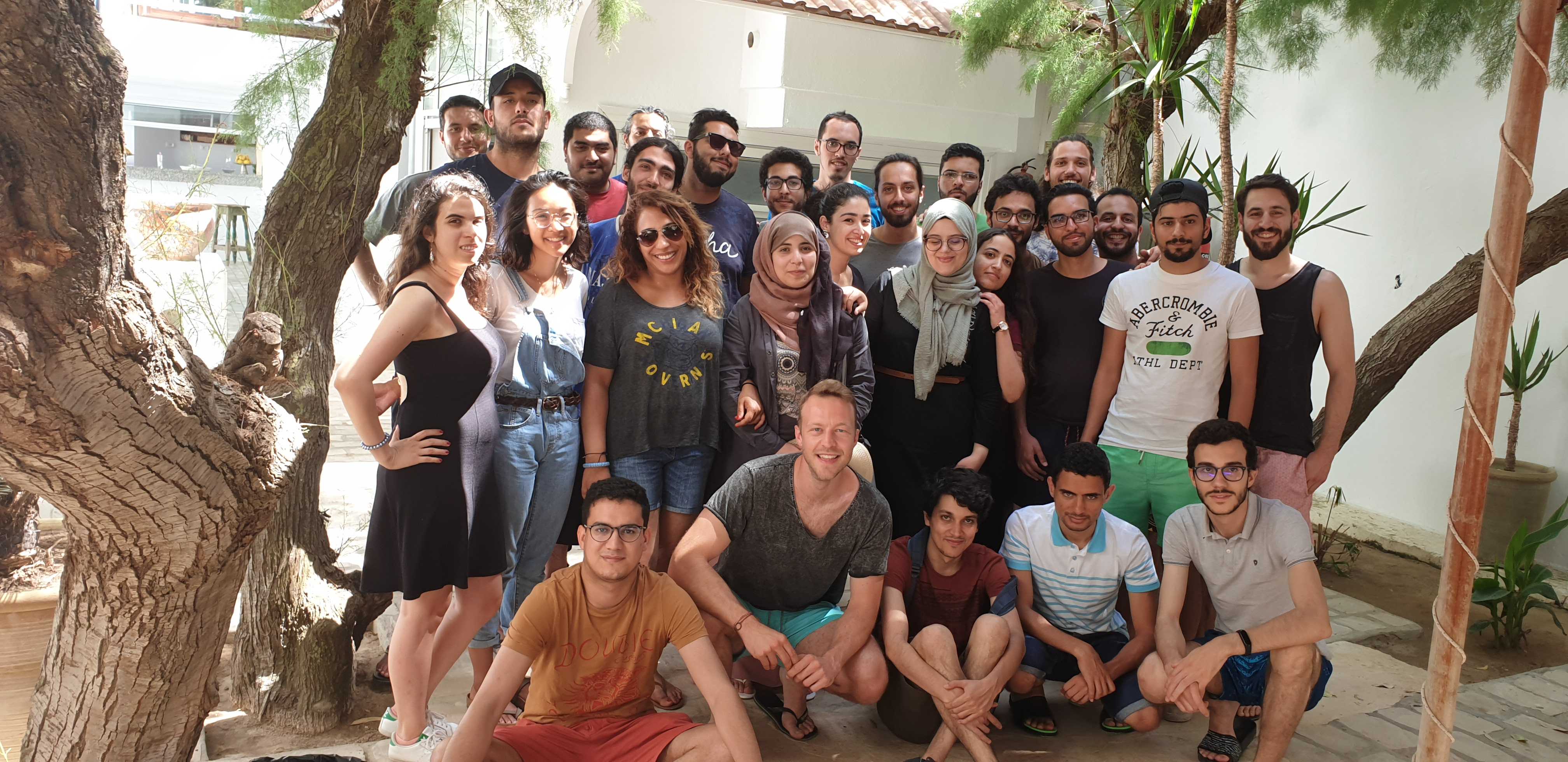
Overall, I am happy that I decided to work with Think-it this summer. Aside from the lessons learned, many relationships were formed that I firmly believe will last far beyond 2019. I will be returning to North Africa in January as the TA for Chazen’s Global Immersion course in Tunisia and look forward to checking in on my friends at Think-it.