Internship Description
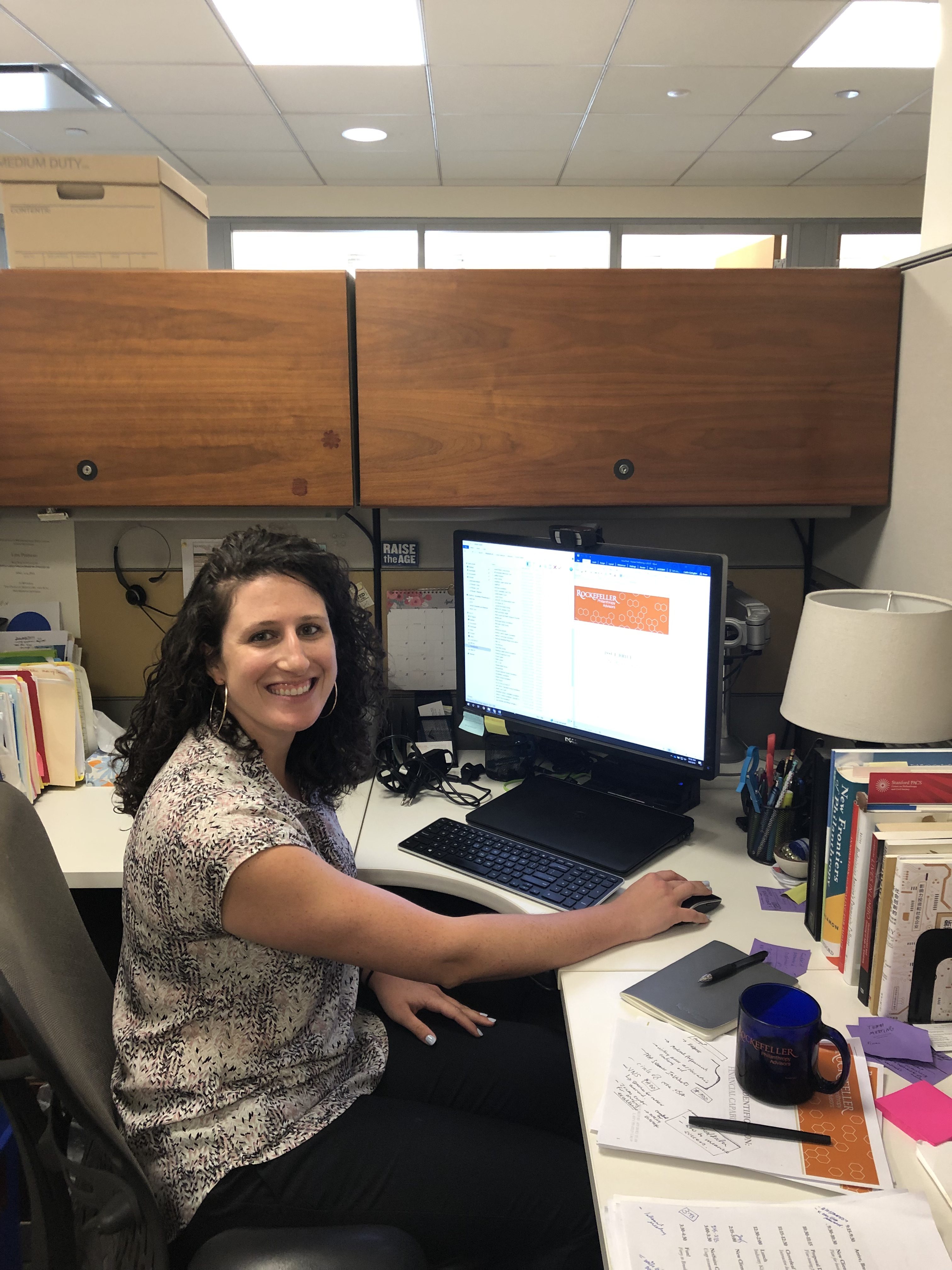
Caitlin Gallagher and Bejamin Seeto, ‘20BUS, worked with Rockefeller Philanthropy Advisors, a nonprofit organization that partners with individuals, families and institutions to help make philanthropy more thoughtful and effective. As a Summer Fellow on the Donor Services Team, Caitlin worked on over five research assignments and client-facing projects with philanthropists, nonprofits, and individual families. She experienced the inner workings of a social enterprise and gained a deep understanding of the philanthropic sector by providing advisory, management, and implementation services. Benjamin worked directly with the CFO, helping plan and build actionable strategies for the organization to manage, access and develop operating reserves, among other things.
During my summer fellowship with Rockefeller Philanthropy Advisors (RPA), I worked on 7 distinct projects on the Advisory team. The clients of these projects included a large healthcare foundation called the Cabrini Foundation, two high-net-worth individual clients who were beginning significant personal giving, and RPA’s internal Knowledge Management systems. My work was critical for the Advisory team as they needed human capital for the breadth of client work during the summer. I worked primarily independently on my projects, and I set up weekly/biweekly meetings with the managers of each project. For example, I conducted research for an individual starting her philanthropic giving; I created four ten-page landscape scan documents defining each interest area, identified philanthropic trends in those areas, and offered a list of potential grantees based on geographical and topical interest. This client’s interest areas were anti-human trafficking, women’s reproductive rights, microfinance, and gender parity in the arts. As these areas were outside of my personal background teaching and working in education nonprofits, I learned so much in content and process! My project work allowed me to apply strategies I had used in the past while proposing creative solutions across social issues and sectors.
I used many skills for my client work that I had begun building during my first year at Columbia Business School. Because of my MBA graduate studies, I was able to combine my background in education, my commitment to social impact and success metrics, and the finance skills I began building in my first year. For example, on my second day at RPA, the Vice President of Advisory in the New York office asked me to calculate financial ratios and identify the health of potential nonprofit grantees through financial reviews of the organizations’ 990 forms. He and I met briefly to coordinate on the calculations of three key ratios, and I used financial statement skills I built in my first year to accomplish this. A second skill I used was creative problem solving as I was tasked with creating landscape scans, proposing grantmaking strategies, and identifying nonprofit grantees. For example, I worked on a corporate philanthropy project with a luxury brand foundation, where I conducted benchmark analysis of giving and CSR strategies of luxury goods competitors. I not only produced the research, but also highlighted recommendations for Chanel to align their philanthropy with the values of their customers and with the materials used in their goods. A third skill I utilized was management because I managed one undergraduate intern’s collaboration on a larger client project I worked on. This intern was working with RPA’s Communications and HR teams, but wanted to explore the Advisory team’s work; I enjoyed sharing my interest in philanthropy and nonprofits with her, and I enjoyed coaching her through developing a research process for a landscape analysis of nonprofit organizations.
I worked on several projects with three different managers, and this distribution of management poses flexibility but also limitations. This was a great experience for me to advocate for how I prioritize my workload when sharing updates with each of the managers. One specific challenge was that one manager did not set up regularly-scheduled meetings with me; I found that practice not successful for setting up cycles of check-in’s and collaboration. I shared with her that I wanted to have biweekly meetings to share my deliverables and get her input, and I sent her calendar invites for those times. My proactivity here helped me secure regular feedback, and helped me acknowledge that I must play an active role in new working environments. Another challenge was the immense workload of RPA’s client that was a recently-created foundation for healthcare, which had recently hired staff. This foundation set target of granting $150 million in 2019. and had only recently hired 8 staff members. My preference was for creating an organized work plan in Excel, but I learned and adopted the individualized working style of the Advisory team members. This pushed me to work in a different way and communicate in ways ensuring coordination of the individual team members’ work. I do believe teamwork planning is most efficient for successful team collaboration and plan to use Excel spreadsheets or online platforms in my future work, but I appreciate that I was pushed to adapt what I was most comfortable with for my work with colleagues and managers this summer.
I have several key takeaways from my summer at RPA. First, I learned about the processes that foundations have for grantmaking. This is crucial for me as I continue my career in education and nonprofits. I understand the skill needs of program officers at foundations, and I know foundations must have planned processes for reviewing letters of intent (LOI), collecting applications, and approving grants with Board support. I was able to learn from senior leaders who each had 15+ years of experience in philanthropic advising, which was an excellent experience. I was able to work with a tremendously large foundation that was beginning its grantmaking, which ng experience of influencing their system showed me the impact advisors have on foundation’s operations. As mentioned above, I also realized that I prefer workplaces with structured collaboration and team norms. The Advisory team of 10 people in NYC and 10+ staff across 3 other offices did not have an instant communication tool like Slack, and did not use comprehensive project management tools for monitoring and improving their processes. I would like to pursue working in a larger organization with the culture of innovation and continuous learning for my full-time opportunity. Lastly, I realized that I need to think more about the impact I want to have. Specifically, I want to pursue roles in nonprofit strategy where I may lead decision-making that affects programming. Lastly, I am most excited to work in nonprofit strategy and operations after learning so much this summer in philanthropy. I want to roll up my sleeves, design programming, bring innovative resources and tactics, and directly contribute to programmatic success of the nonprofit. While I think I will pivot to nonprofit or consulting after graduation, I look forward to working in philanthropy later in my career, utilizing my experience from RPA and integrating my background in education and nonprofits.