Internship Description
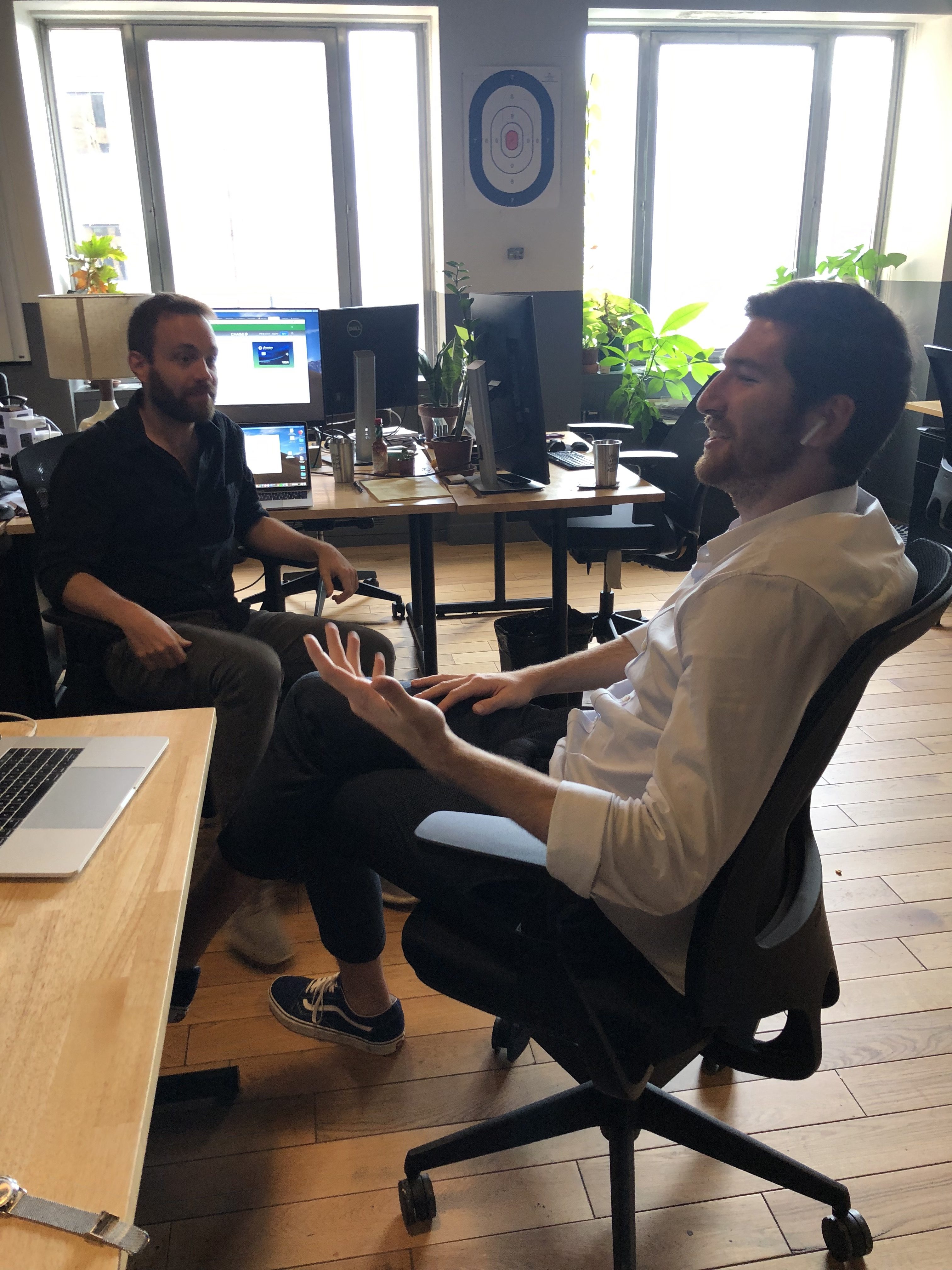
Champe Barton, ‘19JRN, was an intern at The Trace, an organization that reports on gun-related public health issues to fill an absence of coverage in the U.S. around guns and the influence of institutions that promote them. Champe assisted The Trace’s team with research and data analysis and provided original reporting for spot news coverage and long term investigations.
I worked on several projects while at The Trace. All of them in one way or another focused on guns and gun violence in America. Rather than rattle off a list of every single story I wrote, I’ll focus on two larger projects of mine that we published early and late in the fellowship.
My first major story at the Trace involved a follow-up about the 3D-printed gun community; in short, there’s a lot of ambiguity surrounding the legality of sharing 3D-printed-gun blueprints (essentially the files necessary to print the gun) online. Nevertheless, an anonymous community of gun builders does just that, and I wrote a story about how, after being purged from major social media websites like Twitter and Reddit, they had migrated to a suite of lesser known platforms less hostile to their activities. The story prompted New Jersey Senator Robert Menendez to write a letter to Congress asking Facebook to address a recent policy change that had made the site more accessible for those wishing to share 3D-printed gun file sharing. It was later run by The Daily Beast.
Another big story I worked on outlined what it is an assault weapons buyback might look like, were one to pass. We were exhaustive in our research and conducted a large-scale data analysis of weapons listings on a popular online gun marketplace to try to approximate the number of assault weapons owned by civilians in the U.S. We ended up having to leave out much of that analysis from the final story, but it became a really useful contribution to the policy analysis surrounding gun control proposals and published the day of the most recent Democratic debate. It was later picked up by Business Insider and cited by NBC.
Prior to attending to Columbia, I didn’t really understand how to structure a longer term investigation, and I didn’t understand how to go about finding sources to report one out. Columbia filled these knowledge gaps for me in substantial ways, so much so that I was able to teach (I’m being generous) some of my more experienced colleagues techniques for wrangling hard-to-find sources.
Put more concretely, when I first arrived at The Trace, I built out the structure for a handful of large-scale investigations using organizational skills taught to me in my Investigative Project class at Columbia. I made spreadsheets of what we call “outer-ring” sources to contact, I began reaching out, and have moved closer and closer to the sources with the information I need.
Another example: when I got to The Trace we had just published the biggest in a series of stories with The New Yorker about financial malfeasance at the NRA. It was my first week, and I thought it’d be interesting to find out whether any of the NRA’s biggest donors had decided in the story’s aftermath to stop donating. So I used some tools introduced to me at Columbia to find the cell phone numbers of the CEOs of a couple of the NRA’s biggest donors and reached out. Both responded to me and gave me information that ended up in a story about the aftermath of the exposé.
It was challenging to strike a clean balance between working on longer-term stories that require persistent, consistent effort over many months and working on shorter-term stories that require a more intensive approach to meet deadlines. I had a difficult time juggling the two; I would pitch a bigger story and not make as much progress as an editor may have liked because I dove head first into a series of smaller, more pressing stories assigned to me. This isn’t necessarily bad, but I personally believe I would have been more effective at wrapping up those larger stories if I had worked on them piece by piece, despite the amount of more time-sensitive work on my plate.
Strangely enough, I think the biggest takeaway from this experience for me has been the importance of working with a team you like. I love The Trace. I don’t love gun violence (obviously), and I’m not particularly passionate about the technical or legal specifications essential to the gun conversation in the U.S. But this team ignites that passion in me, and pushes me to be better in ways that no work-team I’ve been a part of in the past ever has.