Internship Description
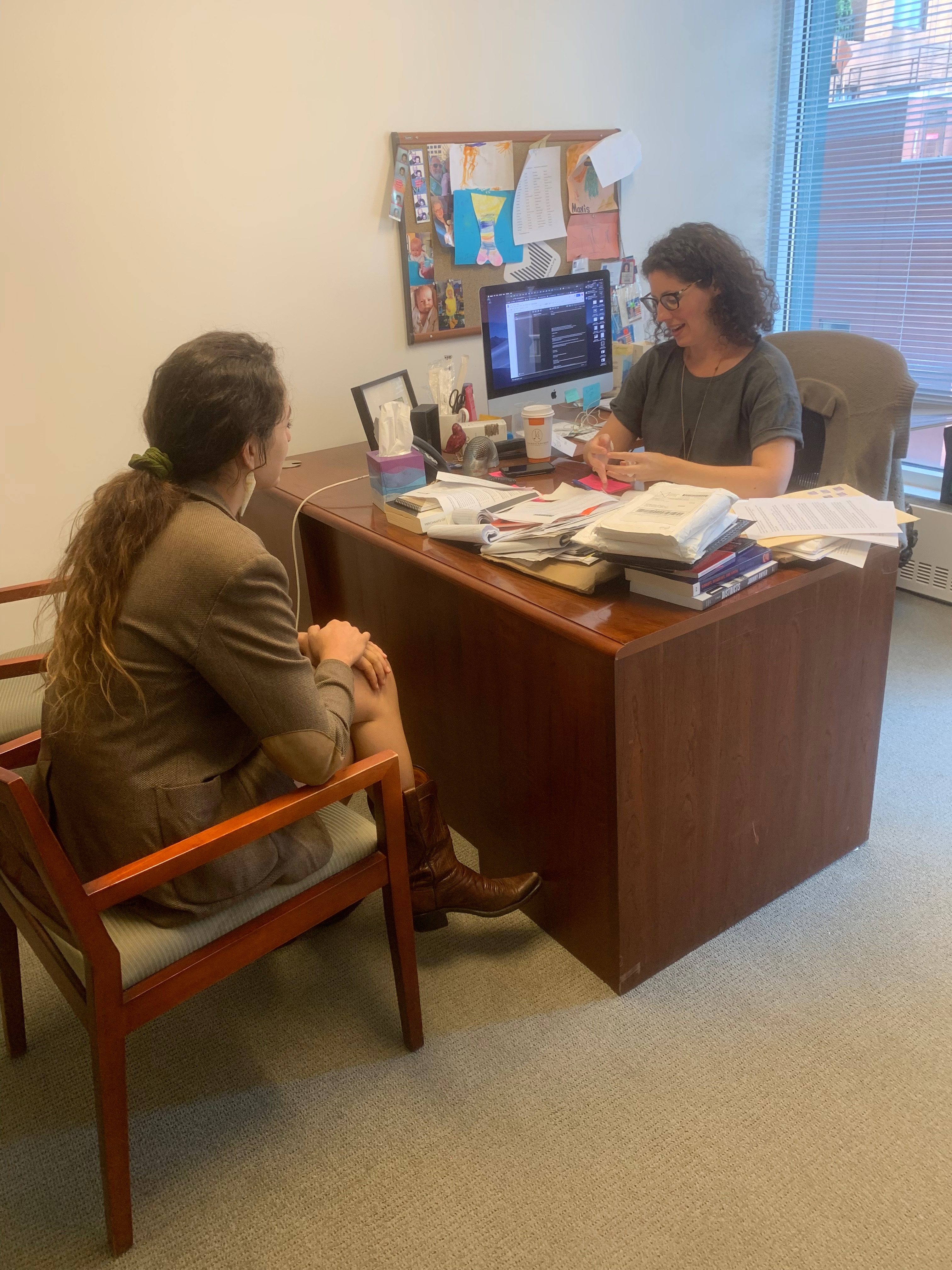
Chiara Eisner and Weihua Li, ‘19JRN, spent their summer with The Marshall Project, a Pulitzer-prize-winning, nonpartisan, nonprofit news organization that seeks to create and sustain a sense of national urgency about the United States’ criminal justice system. As their Investigative Fellow, Chiara reported on issues of local and national interest, around themes of criminal injustice. Weihua was their Data Journalism Fellow and used her graphics, analytical and computational skills to assist reporters on their investigation about criminal justice issues in the United States. She also pitched and produced smaller data-driven stories.
For the 10 weeks that I’ve spent here, I’ve investigated stories related to opioid use disorder, and to a specific population of offenders: those with developmental disabilities.
About 2-3% of the general population has a developmental disability, a condition that starts at birth or during childhood, and restricts a person’s ability to learn, speak, behave, or physically develop. The most common disability within the category is intellectual disability, a condition also known as learning disability or mental retardation. Between three and seven million Americans meet the criteria for intellectual disability, but conditions like autism spectrum disorder, cerebral palsy, and speech disorders are developmental disabilities, too.
People with developmental disabilities are particularly vulnerable to abuse in prison. Their families suffer too, I found.
The organization’s mission is “to create and sustain a sense of national urgency about the U.S. criminal justice system.” They do this “through award-winning journalism, partnerships with other news outlets and public forums.”
My projects focused on health-related challenges faced by people with opioid use disorder and developmental disabilities who interact with the criminal justice system in some way was in total alignment with the mission.
My degree at Columbia was in Investigative Reporting, specifically, and in journalism, with an emphasis on data, more broadly. I certainly did apply the skill set I learned in the program to this Fellowship - an Investigative Reporting Fellowship with The Marshall Project.
Everything I did here was investigative reporting. This was not a coffee-toting or book-filing experience. From the moment I arrived to when I left, I was talking to sources, finding more sources, doing research on my stories, obtaining documents, verifying documents, analyzing documents, drafting articles, editing articles, or communicating with colleagues who were also investigative reporters or editors.
As a young reporter, my technique of how I handle relationships and expectations with my sources is something that is always evolving, and ideally, improving. This was the first time I was speaking on a daily basis with sources who had either experienced trauma themselves or who had close family members who had. As someone who has personal history with trauma, I am able to empathize with their experiences in a personal way. Listening to troubling stories is never “fun.” But the practice of doing this every day, not every once in a while as might have been in the case in another newsroom that didn’t focus exclusively on criminal justice, was a true opportunity for growth in this area.
Professionally, I feel inspired by the beat of criminal justice. Focusing on it has pushed my creativity and ability to find stories and sources within the health and tech niches that I started to develop while writing about science at The Economist. The opportunity to mix up writing styles and formats depending on the partner agrees with my need for variety, and I have been thankful every day for the space I’ve had to devote myself to deeply reported, powerful investigations.
I could certainly see myself covering criminal justice in the future as my main focus as an investigative reporter. I’ve been profoundly drawn to the underlying theme of mercy that borders TMP stories. How we as a nation choose to deal with people who make mistakes within the justice system, and without, is one of the few big, conceptual questions that teeter on the political fence. There is yet room for critical thought, for compassion, and for consideration of evidence.
This malleable moment may not come again, and I am thankful that for about three months, I;ve been able to give my voice to it.