Internship Description
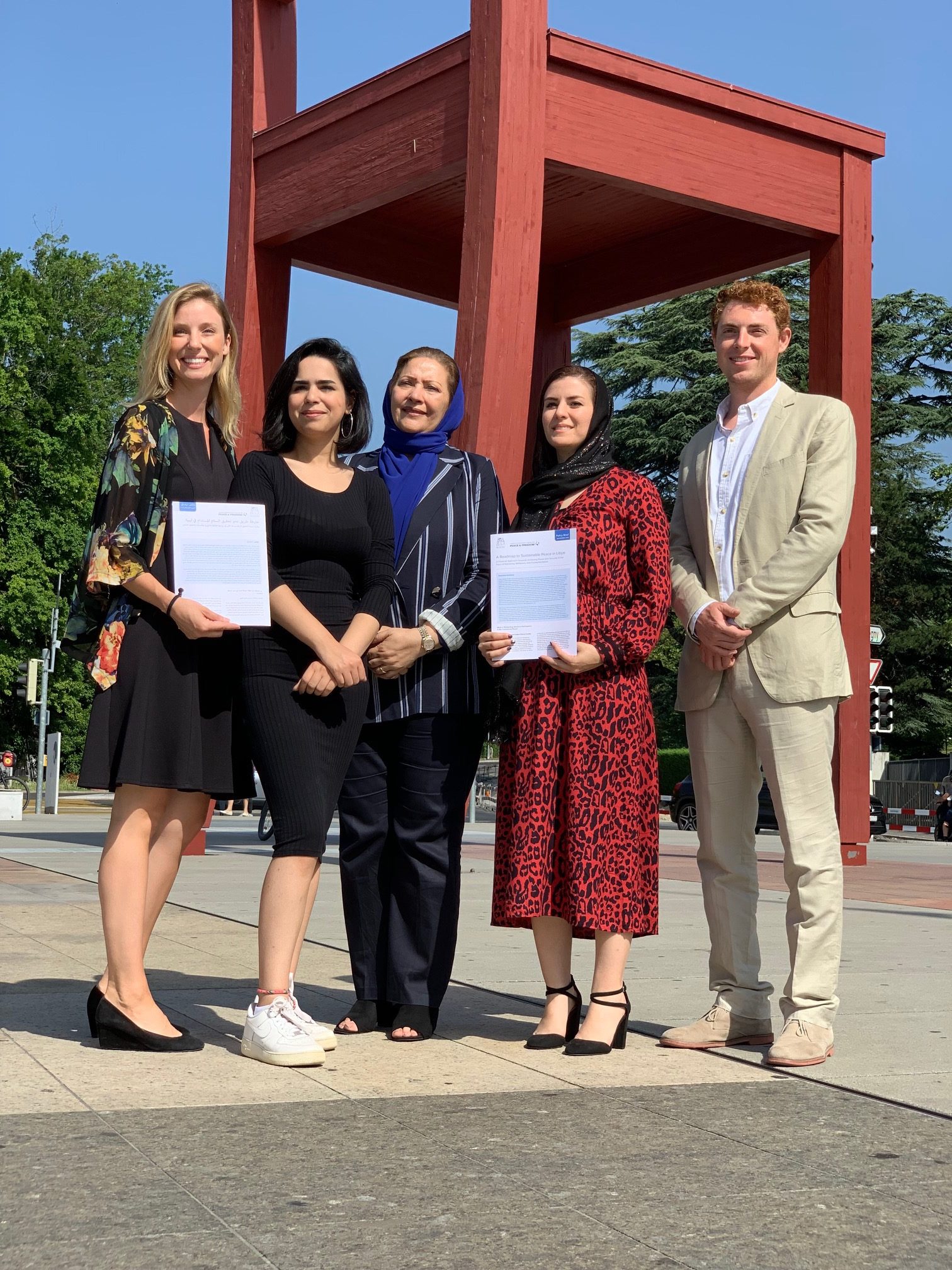
Katie Barnum and Sean Hansen, ‘20SIPA, interned with Together We Build It (TWBI), a multigenerational, community-driven, non-profit organization. TWBI seeks to support a peaceful democratic transition in Libya through the empowerment of local communities. Their grassroots efforts promote the integration and engagement of women and youth in the political and public sphere. Katie was responsible for research advocacy, project coordination, policy recommendations, monitoring, and evaluation plans, and drafting of human rights reports for the United Nations. Sean assisted the team by contributing research and writing of a report on the status of human rights in Libya for the United Nations, as well as creating a monitoring and evaluation framework to measure the impact of several TWBI advocacy projects aiming to redefine social norms for women in Libyan society.
My most significant task this summer was helping draft Together We Build It's stakeholder submission to the United Nations’ Universal Periodic Review (UPR). Together We Build It (TWBI) is committed to emphasizing the critical role of women and youth in the political and public spheres, to support a peaceful and democratic transition in Libya. The UPR project cuts to the core of TWBI’s mission, bringing gender-discriminatory practices and human rights violations that occur in Libya into the international spotlight. My internship partner, Sean, and I began our contributions to this project by conducting in-depth research relating to the current human rights situation in Libya (in addition to the status of the situation over the past five years). We gathered resources that documented the extent to which Libyan authorities have fulfilled or violated their human rights obligations. From this research, we developed policy recommendations and a written report, which will be submitted to the United Nations Human Rights Council. Through the submission we drafted, we not only underscored obligations and violations of the Libyan state, but we specifically called attention to the disproportionate gendered impact these violations have. We outlined recommendations to Libyan authorities that will enhance the political and economic inclusion of women, who have been excluded from the peacebuilding and political processes and marginalized in conversations that will determine the country’s democratic future.
Prior to my participation in this internship with TWBI, I took a course at SIPA called “Applied Peacebuilding.” In this course, we spent our class hours exploring the theories behind peacebuilding. I utilized theoretical knowledge from this course in every aspect of my TWBI internship this summer. From applying a gendered perspective to my work, to engaging in the international community, to reflective practice, to amplifying the voices of citizens living in conflict contexts – this internship challenged me to draw from all of the skills I learned in my peacebuilding course and gain first-hand experience influencing peacebuilding practices on both local and international levels. I was also challenged to engage my learning from my SIPA course on International Law. Much of what I did this summer dealt with identifying state obligations as determined by international law, understanding through which contexts these obligations were violated, and advocating for their fulfillment. I was able to apply much of my SIPA coursework knowledge to my internship and better influence my abilities in the field. Additionally, I feel that going forward, I will now be able to deepen my engagement with my future coursework and professional endeavors by building upon my practical experiences from this summer.
The TWBI team was incredibly supportive. Their commitment to my role made this summer one that was full of opportunity and learning. The team arranged for travel to Geneva to visit the United Nations and attend a training. They gave me significant responsibility when it came to my professional tasks. Despite prolonged electricity cuts and persistent conflict, the team was still in touch with me daily. Of course, there were still challenges, but few, as the team was incredibly present and supportive. For me, one challenge was fully and deeply understanding the Libyan conflict and context. While I read about it daily, extensively researched both current and past aspects of the situation, and wrote nearly 30 pages of conflict analysis – I still feel like grasping every aspect well enough to do my team justice was a struggle. Through the UPR submission that we were drafting, we needed to write a document that outlined all of the conflict’s complexities while highlighting its deepest issues in a way that was understandable and compelling for multiple players in the international community. I felt that I couldn’t fully do the Libyan people justice when illustrating the severity of the conflict or advocating for the community needs – that was challenging for me.
I took a lot away from this experience. This internship sparked my interest for law, and as a result, I will be taking a Transitional Justice course at Columbia Law this fall. Additionally, the local conferences that we were able to attend were incredibly beneficial for me. Through these, I was able to see how peacebuilding conferences work in the field – with the ability to see what does and doesn’t work in practice. Through my observations of interactions between local and international actors, participation in discussions of the situation on the ground, exposure to Libyan citizens working on promoting micro-level peacebuilding efforts, and observation of international organizations working on macro-level peacebuilding efforts, I was able to better understand the community of humanitarians and Libyans working in Libya. These conferences re-affirmed and re-ignited my desire to dive into my Arabic language studies. While I have always known that language abilities are vital for this field, the conferences reminded me of the true importance of having a working knowledge of the language of the context I am working in. Without communication in the language of the members of the communities I will be working in, the ability to build peace and understand the conflict is significantly hindered. This became particularly clear when there was a lot of miscommunication due to lack of language knowledge. I realized that, while contextual knowledge is important, in order to successfully work as a full-time professional in the field, language knowledge is vital and I will now pursue my language studies with a renewed gusto thanks to this summer’s internship.