Internship Description
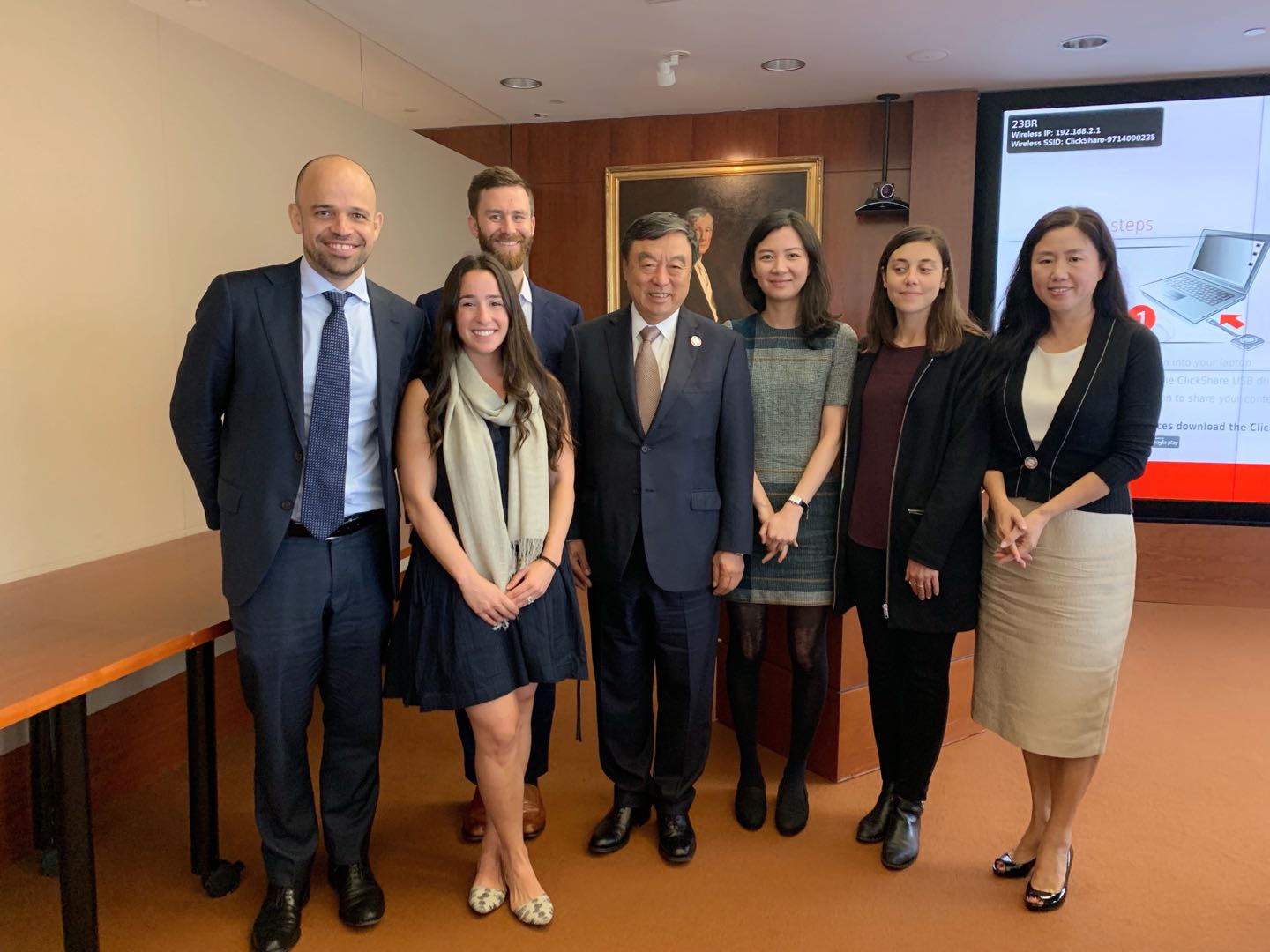
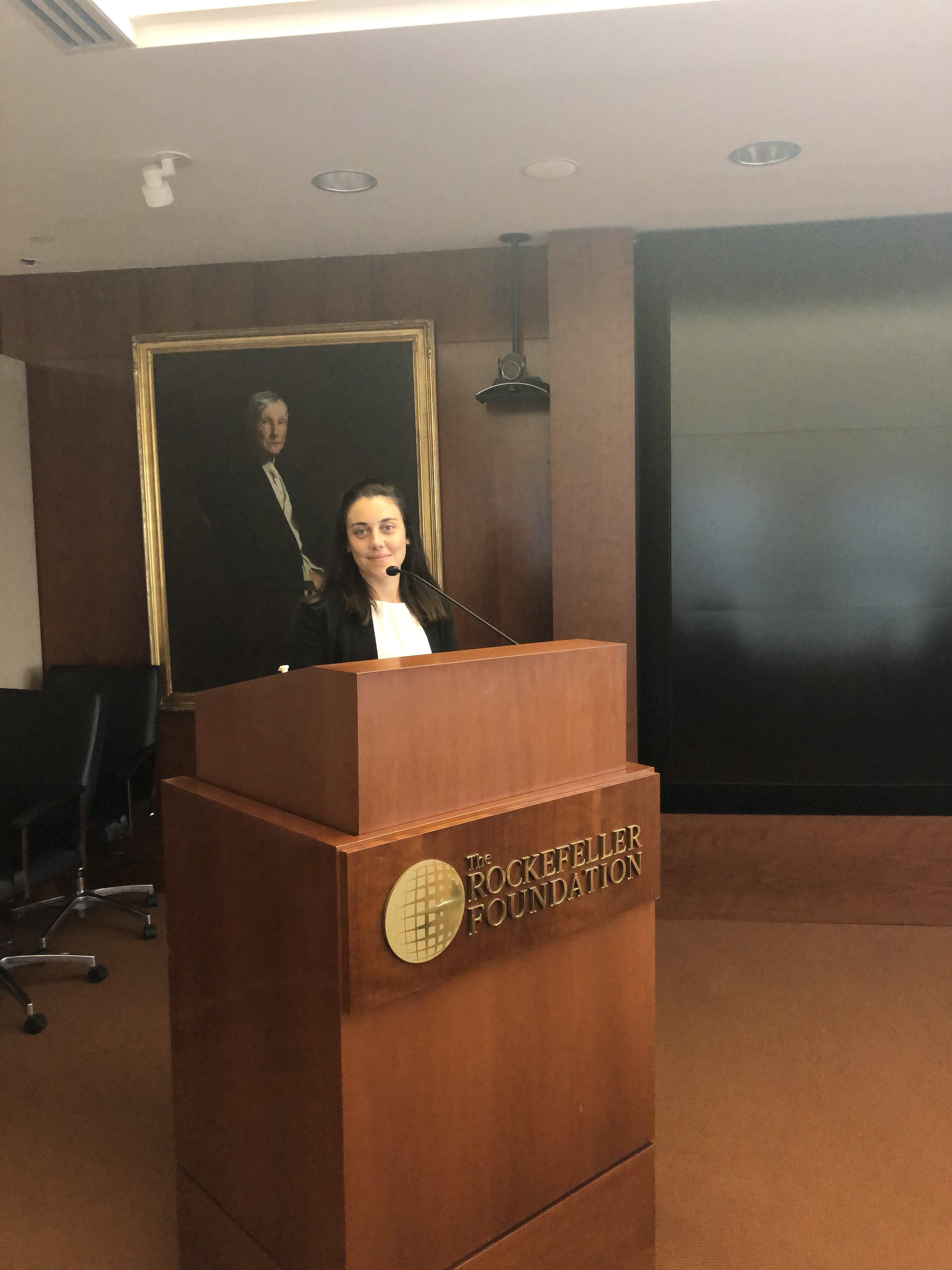
Maya Zamir, ‘20BUS, worked on the Rockefeller Foundation’s Innovative Finance Team. The Innovative Finance Team, through both grants and program-related investments (PRIs), pursues innovative finance solutions such as the use of financing mechanisms to mobilize private sector capital in new and more efficient and scalable ways to solve social, economic, and environmental problems globally. Maya was responsible for Portfolio Management that included analysis and reporting, impact M&E and communication with partners. In addition, she assisted with deal sourcing, conducted due diligence for potential deals and worked together with investees and partners of the team.
During my internship on the Innovative Finance team at the Rockefeller Foundation, I worked on several projects, both on the deal side and portfolio management side.
From the deal perspective, I was part of a team working on creating a new fund to focus on sustainable and resilience infrastructure. This project involved teams across the foundation, as well as external partners, and is exactly the type of innovative mechanisms and solutions that The Rockefeller Foundation prides itself to be a part of. I learned a lot about resilience and the different stakeholders these projects involve, as well as working on a method to screen such future projects in order to develop and ensure sustainable and resilience infrastructure projects.
On the portfolio management side, I worked on defining the impact reporting for the Zero Gap Fund, in collaboration with Rockefeller’s M&E department. As part of their larger effort to use existing frameworks, and especially the framework from the Impact Measurement Project that included many key partners in this space, the team decided to use this framework as a basis for the impact measurement metrics from its investees. Building on this framework, we worked on how these metrics should be analyzed in an impact report, in order to portray the achieved impact of the portfolio.
I applied both skills and knowledge acquired during my first year at Columbia business school. First, from the core classes having attained a basic understanding of accounting, corporate finance and the capital markets, has helped immensely, both in the due diligence process and modelling. From courses more specific to the social impact space, Amy Houston’s class regarding high performing non-profits was very beneficial, as it introduced us more comprehensively to the foundation world, as well as the Theory of Change framework. Investing in Social Ventures with Bruce Usher also greatly helped when I assisted in due diligence on potential investees. Moreover, my experience in consulting a non-profit in Ghana under the Pangea experience and being a part of the Microlumbia Management team, have provided me with real-world experience which was invaluable to my internship.
There were two main challenges for me. One was the obvious fact that I had never worked in the US before and this was a great opportunity to learn and adapt to this new environment.
The second was my lack of a financial background, which required more work and on-the-job learning on my part. This gap was one of the reasons I chose this specific internship. I knew this would be a challenge and my supervisors on the Innovative Finance team provided me with both the time and opportunities to enhance my financial education.
My summer at The Rockefeller Foundation, and especially with the Innovative Finance team was an incredible experience. I had the opportunity to learn first-hand about the space and receive wide exposure to the industry. The most noteworthy was understanding the Innovative Finance team’s approach to enhancing the ecosystem. Their goal is to find new innovative financial mechanisms in which Rockefeller’s investments attract new private capital that are invested in closing the financing gap for the Sustainable Development Goals. Looking at this from a financial aspect was new to me. Moreover, Rockefeller’s position of building this space by investing in impact funds that use capital to invest in social enterprises provided me with great exposure and a broad overview of the space and the different players in it.
The opportunity to intern at a foundation that has both the grant giving side and the Program Related Investments added to my understanding of both worlds, the advantages and disadvantages of each structure. The innovative finance team has built a pipeline of investments where they use grant money almost as a seed investment to help build the new mechanisms and then the PRI to scale the successful ones.
I was given the opportunity to work on a few deals and projects with people across the foundation. However, the most significant and impactful part of my internship was the innovative finance team itself. Each of the members of the team, from both the grant and investment side, made me feel included and a part of them. Working in such a cohesive environment, where I was acknowledged and appreciated, allowing me to take every opportunity to learn, was a very meaningful experience for which I am extremely grateful.