Internship Description
Riyana Razalee, ‘20SPS, was a summer research and strategy intern with Re-Nuble, a NYC-based, mission driven social enterprise dedicated to increasing resource efficiency and sustainability in our cities. By developing and analyzing food waste recycling tools and strategies, Riyana equipped Re-Nuble with a sound long-term growth strategy that led to the company’s successful business commercialization, scaling up, market entry opportunities, as well as business process and operational improvements.
Over the summer, I had the privilege of interning with Re-Nuble, Inc, a New York City-based agriculture-tech (“agtech”) social enterprise that seeks to solve the problem of urban food waste. By taking unrecoverable produce waste from urban produce distributors and producers, the company is able to then use this input to create unique fertilizer applications for the agriculture industry, thus creating a closed loop food system. During my time there, I was tasked to: (1) Identify potential business development and market entry opportunities, (2) Analyze the competitive marketplace and, (3) Develop operational and best practice methods. The team at Re-Nuble had spent many years putting in the ground work and was now at a pivotal point which involved scaling up at a commercial scale – it’s safe to say that my excitement to have come onboard at such an important time was unparalleled.
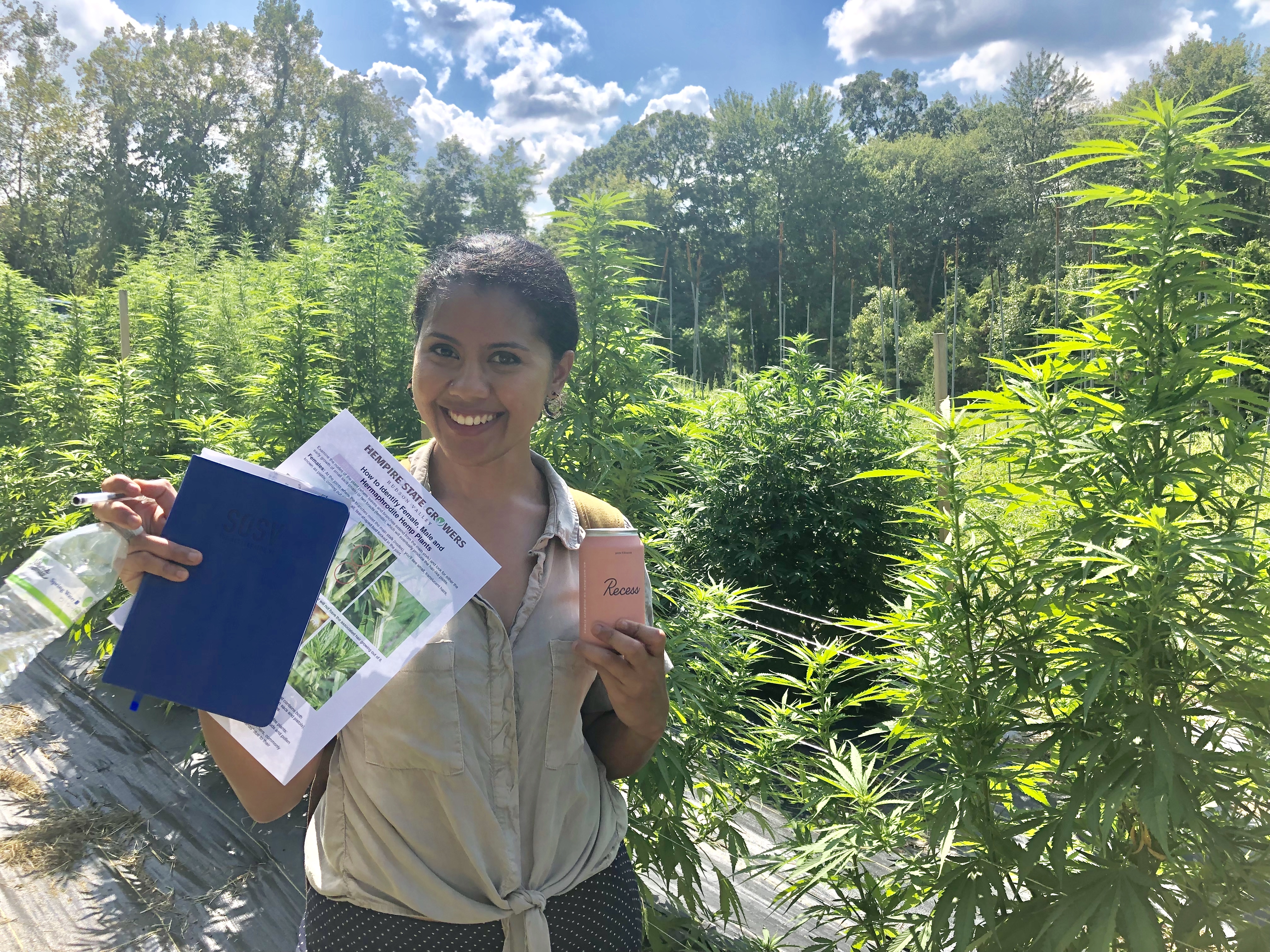
I was also given ample opportunities to learn beyond the four walls of the office. We carried out a number of site visits to the company’s commercial-scale facility in upstate New York, as well as for meetings with Re-Nuble’s various stakeholders. Through these site visits and meetings, I was able to see in-person what the manufacturing process may look like. In addition, I found that the conversations I was able to have with people on-the-ground provided me with an even better understanding of the challenges and opportunities within the world of food waste management. On top of the numerous conferences and talks that I was also given access to, one in particular which really stood out for me was a visit to Cornell University’s hemp farm. As someone who had no understanding of the waste within the world of hemp production, that was an eye-opener for me as I learnt not just from Cornell professors, but also from the farmers and businesses that were also present that day.
To execute the projects effectively, I leaned heavily on the courses I had been exposed to at Columbia. Ultimately, I found that these courses helped me significantly in order to connect the dots between agtech and food systems. For example, with the rise of investors who were increasingly concerned with the environmental impact of companies such as Re-Nuble, the company decided to measure its own greenhouse gas emissions. Having taken a greenhouse gas emissions course at Columbia where I carried out an inventory assessment for a real-life client within the agriculture/food systems industry, I was able to launch straight into the project, analyze the company’s emissions, as well as provide a recommendation on the next steps. To establish a strong understanding of the policy factors that would drive Re-Nuble’s expansion strategy, I was able to pull from my policy-focused course, “Global Food Systems”. In addition, I was able to leverage on my course on the Circular Economy in order to analyse alternative food waste management technologies that would lead to a more holistic closed loop systems within the industry. Being able to see all of my learnings in-class come to life in a more tangible manner was truly an exciting experience.
Admittedly, as someone who had only been exposed to the corporate world for the entirety of their career, stepping into the world of startups was new for me. That being said, thankfully I had worked in very lean teams while at my previous company and so, the art of being flexible and moving wherever was needed, be it literally or metaphorically, was something that I was able to tap into quickly on. Additionally, because of the small size of the team, at times all of us needed to get our hands dirty with a range of work which did not necessarily fall under our scope. However, I personally felt that this was valuable because it provided me with insight with regards to other areas of a startup that I would have not been privy to otherwise.
In a nutshell, I believe that Re-Nuble was a fantastic place not only to build the foundation that I needed, but also to contribute what I’m currently learning at Columbia directly to the industry. Furthermore, not only did I get a substantial amount of hands-on experience, but thanks to the team at Re-Nuble and the strong sense of inclusivity that they practice in terms of knowledge sharing knowledge, I felt that my summer fellowship went above and beyond my expectations. Importantly, through this fellowship, understanding ways that America is dealing with food waste and comparing it to how I can bring this back to Asia is something that has and will continue to be absolutely invaluable to me.