Internship Description
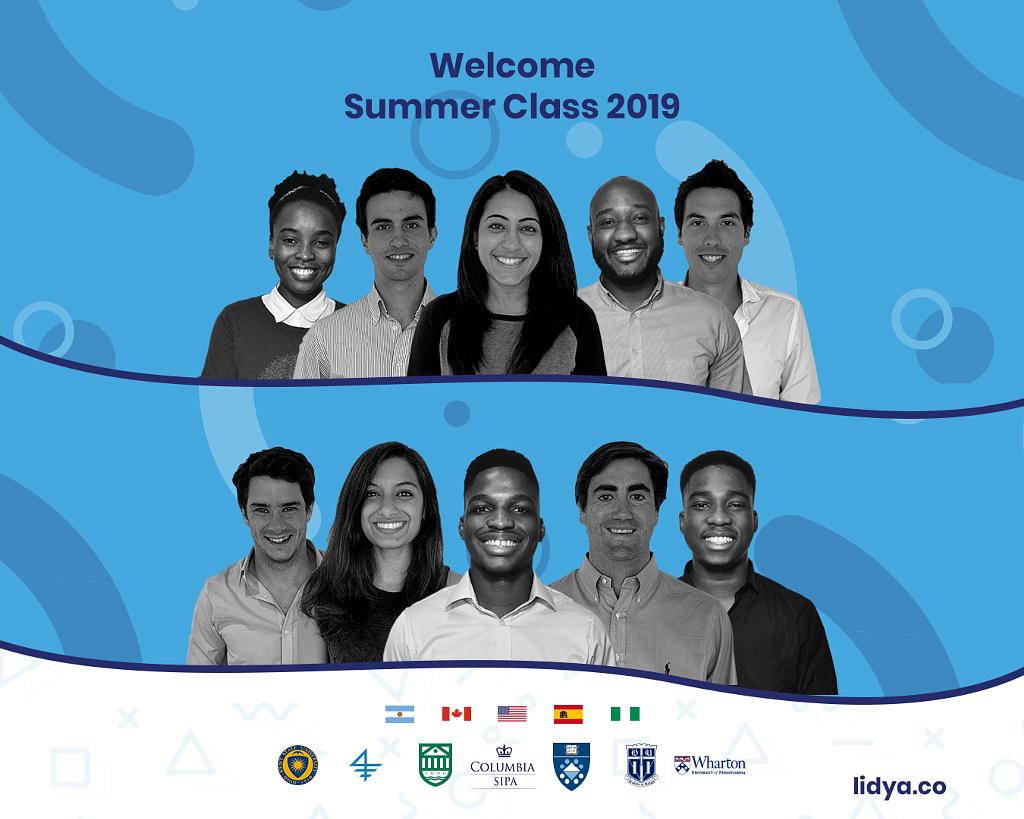
Natasha Bhuta and Sabaa Notta, ’20SIPA, and Fabian Crudele, ‘20BUS worked with Lidya, a financial services platform to improve access to credit and finance for micro, small, and medium enterprises (MSMEs) across frontier and emerging markets starting with Nigeria. Lidya has an online platform that makes it easier for SME’s to grow, creating wealth and employment, and supporting diversification of the economy. Lidya’s platform has allowed SMEs to apply online, get credit in 24 hours and build a credit history. Natasha assisted with market expansion efforts that involved assessing market viability for Lidya's products and services in target markets and business development with enterprise partners, regulators and other private sector players. She also helped develop and implement Lidya’s annual business plans for expansion markets in Eastern Europe. Sabaa’s role was to assist with the country's expansion in the new region; from building new partnerships to acquiring and managing new customers. Sabaa’s role also included research around expansion opportunities, as well as working on the business plan and budgeting. Fabian helped Lidya, which is based in Lagos, Nigeria, to expand to other frontier markets in Eastern Europe by creating an expansion strategy and forming the right partnerships in new countries. These students were supported with new SESF funding earmarked for financial inclusion.
This summer I worked for Lidya Holdings, a Series A start-up that offers loans to small and medium-sized businesses (SMEs) within 24 hours and with no collateral requirements. Currently operating in Nigeria, Lidya is planning to expand to Eastern Europe this year – more specifically to Poland and Czech Republic. My role at Lidya was Country Expansion Officer, where I helped with the expansion to Poland. This included three key phases: (1) market analysis, (2) product development, and (3) establishing partnerships for the launch.
The project I worked on aligned greatly with the organization’s mission – to be the leading lender for SMEs in frontier and emerging markets across the globe. With a current finance gap of over USD $107.8 billion in Poland and USD $71.5 billion in Czech Republic for micro, small, and medium-sized businesses alone, it is evident that there is a huge need for additional lenders in these markets.
As a current Master of Public Administration – Development Practice (MPA-DP) student at the School of International and Public Affairs, I was able to bring an international development lens to Lidya. This meant looking at the social mission aspect of Lidya’s expansion and focusing on building public-private partnerships. Many of the associations and organizations I helped set up meetings and partnerships with focused on financial inclusion for SMEs in fast-growing economies.
The research skills, development tools, and macroeconomic knowledge gained from taking various courses at SIPA also played a significant role during the first phase of my time at Lidya – the market analysis stage. This included differentiating the financial product in Poland from the current product in Nigeria, conducting a competitor analysis, creating a stakeholder analysis, and various other research required to help us develop the ideal product specific to the Polish market.
Working alongside MBA students helped me learn a lot from a degree/major that differed from my own and brought different mindsets and ideas to the table. With complementary skills and different academic and professional backgrounds, we were ultimately able to create a product that incorporated these various aspects.
One of the biggest challenges I faced was learning to work in a completely new working environment. My previous professional experiences have been working with large multilateral organizations where the way work is conducted is very different and often a lot more bureaucratic. Working at Lidya was my first experience working with a start-up company. I found myself often working independently and leading projects and meetings on my own. Working on a project such as a country expansion required myself and the team to create our own timelines, priorities, and working styles. We were building a product from scratch in a market that none of us were familiar with.
An additional challenge was the language barrier that I faced in Poland. It is already a difficult task setting up meetings with organizations and individuals that have never heard of your company. The language barrier added an additional challenge that made it more difficult to create credibility and introduce ourselves in the market.
Building upon the challenges, I found I learned a lot about myself and how to deal with working in a completely unfamiliar environment.
Be Confident – I had to learn to trust my work and myself to make decisions, lead projects, and lead meetings. I learned that it is okay to make mistakes but learning from them and ensuring you don’t let these mistakes set you back is critical when launching a new product in a new market with strict timelines.
Be Creative – I found myself in meetings where I wanted to give up because I could tell the language barrier was proving to be an obstacle in meeting goals. However, I found myself using Google Translate A LOT, diagrams, photos, you name it! In the end, I found these creative ways of communicating to be extremely useful and helped build relationships with individuals and organizations. The key is to be patient and learn alternative ways of reaching your goals when faced with obstacles – whether it be a language barrier or other challenges.
The Imposter Syndrome is very real and you’re not alone – I found myself getting overwhelmed and discouraged during my first few weeks at Lidya due to my lack of knowledge in the financial sector or in the Polish market in general. It took me longer to complete certain tasks as I was trying to teach myself while meeting my deadlines. There were several times when I found myself thinking “how did I get this job?!” The imposter syndrome is real but remember that you’re not alone. There will always be a situation where you may not know as much about a certain topic and you should never hesitate to ask questions. Chances are others may also be going through the learning process. The key lesson to remember is to not get overwhelmed and going back to the first point, you need to be confident and trust yourself enough to know that at the end of the day, you will be able to get the task at hand done and can do it well.
Overall, this experience has opened my eyes to the private sector and finding an intersection between development (specifically financial inclusion) and the private sector. I am excited to explore opportunities within this space upon graduation from Columbia SIPA. The takeaways from my experience extend beyond the projects I was working on, as I had the opportunity to work directly with the Co-Founder of Lidya and learned important lessons about launching my own business and overall good advice for my future career.