Internship Description
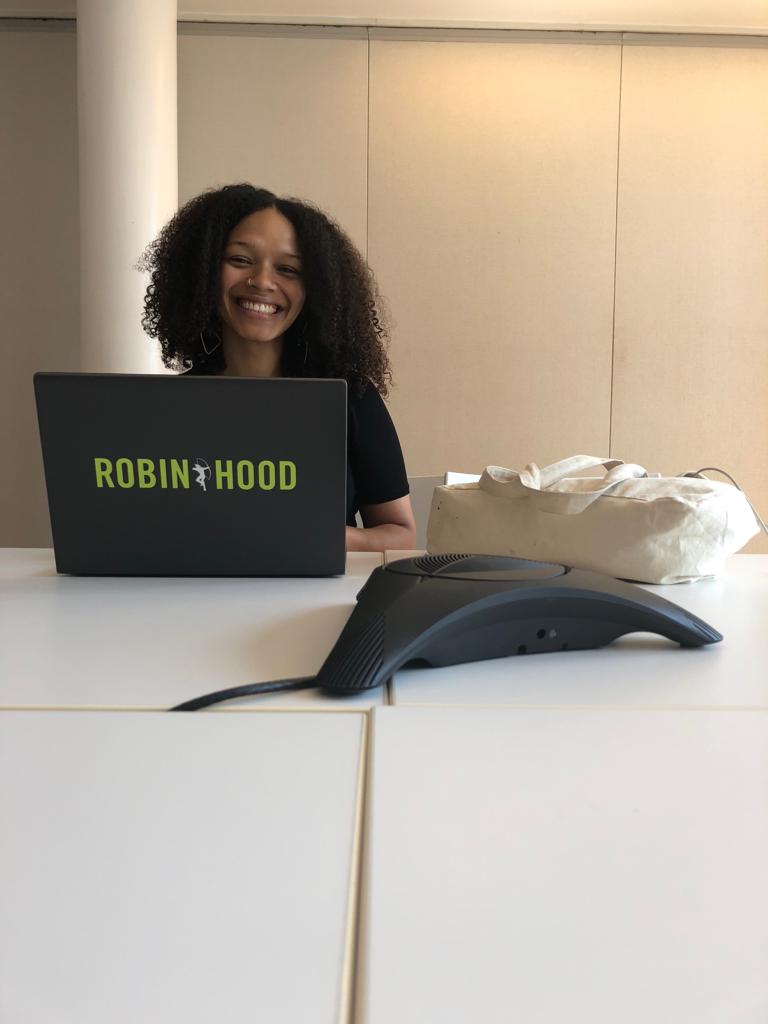
Shayna Johnson, ‘20BUS, worked as a strategy associate with the Robin Hood Foundation, New York City’s largest poverty -fighting organization. Robin Hood provides financial, real estate, and management support to more than 200 of the best nonprofits and uses a system of metrics, cost-benefit ratios, and counterfactuals to rigorously evaluate poverty interventions and select its investments. Shayna completed customer segmentation and competitive analysis and created a go-to-market strategy for one of Robin Hood’s income security grantees. She also researched adult literacy and produced research-backed recommendations and concepts for programs and community engagement plans. Her work assisted senior leaders in assessing opportunities to support initiatives focused on literacy activities.
Robin Hood’s mission is to improve the living standards for 1.8 million low-income New Yorkers.
I worked on two projects - an internal project to investigate high-quality adult literacy programs for native English speakers and an external project for one of Robin Hood's grantees to investigate whether one of their products was a viable revenue-generating opportunity. I was responsible for creating a work plan, executing research and data analysis, synthesizing findings and developing recommendations.
My internal project on adult literacy helped Robin Hood assess next steps for this program area. Robin Hood has had very few investments in this area. I found that there is limited research on how adults, especially native English speakers learn, and that adult literacy programs do not consistently provide information on their outcomes. I reviewed literature, spoke with literary experts and over 10 programs. I found some research-backed information on what makes an adult literary program high-quality and how programs should tailor to adult learning. However, I found it difficult to match this to existing adult literacy programs. For example, when speaking to the Brooklyn Public Library, it was difficult to determine what their curriculum was based on, whether it was research-backed, and whether the programs were producing good outcomes.
My external project with a grantee helped them determine whether they should enter the market for nudging/texting services. I performed a competitive landscape and market analysis and created a financial model for a grantee's texting platform. I found that our partner had a competitive advantage in full-service delivery and the quality of their content. I found there was a revenue opportunity of millions of dollars in the market, across a variety of community-based-organizations and local government agencies. This is helpful to the grantee’s mission because it will help them extend their reach.
My summer internships helped me apply skill sets from both my undergraduate and graduate degrees. I applied my knowledge of Excel and concepts from Economics, Marketing, Strategy, Accounting, and Finance to the external grantee project. For example, I was able to apply concepts of analyzing the market, defining competitive advantage, and reaching break-even to define whether they should go-to-market with their platform. I was able to apply my research skills in literature and interviews and concepts from Economics and Statistics on the literacy project. On both projects, I was able to apply soft skills such as effective communication, time management and problem-solving skills.
My external project was with a grantee that is headquartered in Philadelphia. I visited their office once at the beginning of the project. Working remotely was challenging but I found ways to improve our communication. I set up weekly check-ins and work meetings with the grantee and used Slack to keep my team updated and make sure I was integrated into their work. This was also my first time completing a project like this so there were many times I was unsure of the right next step. I researched and leaned on my resources to
My internal project was challenging due to the lack of information on the topic. I wanted the answer to be that this was an area Robin Hood should invest in and to find existing high-quality programs. I found it difficult to know when to discontinue research and accept the answer the existing research and lack of research in other areas was telling me.
I truly enjoyed my time at Robin Hood and am happy with my decision to work there. While my area of interest continues to be education, I still found my work in the jobs and income security area to be very valuable. I have a better understanding of philanthropy work and how Robin Hood’s various program areas interact with one another. This was also a very interesting time to work at Robin Hood as they rethink their strategy. My experience at Robin Hood will help me reach my career goals in education. My Robin Hood network has extensive experience in education and a network of education-focused organizations. I also have a better understanding of the organizations whose work focuses primarily on education but also those whose work touches on education in other ways. For example, jobs and income security-focused organizations who provide childcare and education services for the children of parents seeking work.