Internship Description
Vaishnavi Bala, ‘20SIPA, was a summer fellow at IMAGO, working with IMAGO’s client Fundacion Paraguaya. IMAGO came into being thanks to the vision of working alongside large grassroots organizations with demonstrated capacity to change the lives of their members. IMAGO serves as a catalyst for global grassroots organizations to scale up to their unique potential, serving as “the missing middle” that is essential to development. IMAGO has been working with Fundacion Paraguaya on the Poverty Stoplight (PS) since 2016 and is helping the PS build its expansion strategy. As the PS enters new regions, maintaining quality and measuring impact remain crucial in order for this innovative social tool to build its place globally. Vaishnavi was tasked to work on these objectives and helped the PS build a framework to measure impact and analyze its quality assurance process.
Over this summer, I worked with Fundacion Paraguaya, one of IMAGO’s clients in Asuncion, Paraguay. At Fundacion, I was working for the Poverty Stoplight (PS), a self-assessment tool which allows participating families to identify where they lie on the poverty scale, and work with the program’s mentors who help them prioritize on life goals and work towards achieving them. During the course of my internship, I worked on three projects. The first involved building a governance framework for the PS’ global network of partners to address some of the main issues the PS is currently facing with its partners- incomplete implementation of the PS, lack of data on implementation in other countries, adapting the tool to local contexts, and the need for a platform for network members to interact and learn from each other’s experiences. The second project pertained to a new partnership between the PS and SEWA (Self-Employed Women’s Association) in India. My main activity for this project included adapting the 50 PS indicators to SEWA’s context, and I also added an additional 18 indicators in relation to SEWA’s goals for its members. As part of this project, I also built a roadmap for the implementation of the PS in SEWA, with tentative timelines and responsibilities of both partners throughout the process. The third project entailed designing a research study to explore the effects of the PS on women empowerment within the Qom indigenous community in Cerrito, Paraguay.
During my first year at SIPA, I spent a significant amount of time learning how to conduct stakeholder analyses, build problem trees, objective trees, and log frames. These skills proved useful when I was working on the Governance Framework project, since stakeholder engagement formed one of the pillars of my governance model. I did a lot of research on how the PS interacts with stakeholders to receive and incorporate feedback, communication channels, the type of information that is communicated with stakeholders, and mechanisms that ensure accountability to stakeholders. Creating a basic stakeholder mapping tool helped me understand who the PS’ main stakeholders are and the nature of their interests.
More importantly, the skills and the knowledge gained from my capstone project with SEWA (during the spring) really paid off. Since I had to adapt the Poverty Stoplight’s 50 indicators for SEWA, knowing about SEWA’s priorities, and their members’ needs and challenges really helped me in this exercise. Additionally, elements of action research used in my capstone, such as reaching out to industry experts or members of target organizations (who operate in a similar sector) and speaking to these actors, also made this process easier for me at work while trying to learn about the governance structures and partnership models of other NGOs and social enterprises.
Since I was an intern for IMAGO but working for a client of theirs in Paraguay, I had two supervisors- one from IMAGO, based in Washington D.C., and another supervisor at the Poverty Stoplight, in Asuncion, Paraguay. During my time in Asuncion, there were instances of miscommunication between the three of us, since my supervisor at the Poverty Stoplight wanted me to follow a different approach to the governance framework project than that recommended by my supervisor from IMAGO. The former wanted me to look at governance for internal and external affairs, while the latter suggested that I only look at external governance, since issues pertaining to internal governance are highly sensitive. Therefore, it was difficult for me to navigate their conflicting demands, but the issue was mitigated when I requested that the three of us have a joint call to finalize the goal of the project. It was decided that I should streamline my focus to external governance for the Poverty Stoplight’s global network of partners.
Working for an organization that has developed a burgeoning presence in 23 countries over the last four years has taught me a lot about the preconditions for scaling up. Currently, the PS does not conduct regular evaluations of its programs in Paraguay. Evaluations are conducted on an ad-hoc basis, tied to grants received from institutional donors. Since the PS program in Paraguay does not have a regular reporting system, it cannot enforce reporting requirements on its partners. Therefore, it is unable to keep track of how the PS is implemented in the 23 countries it has expanded to. This experience brought to light the importance of having a robust monitoring and evaluation system in place prior to scaling up globally.
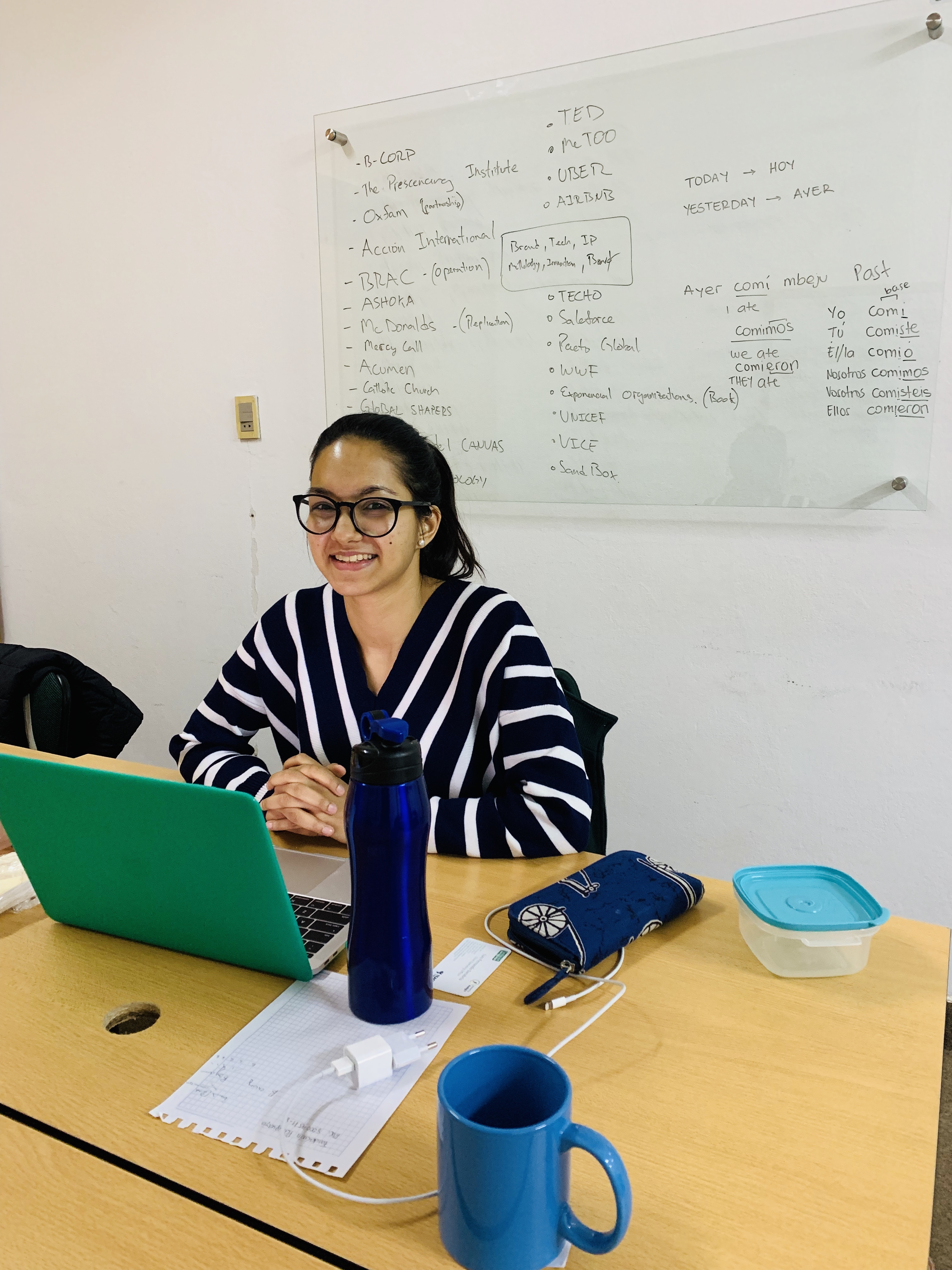
Another crucial lesson from my experience this summer has been the power of language! My experience in Paraguay would have been very different if I had the ability to communicate in Spanish. Although I spent time taking Spanish lessons during the summer, I wasn’t fluent in the language, and therefore didn’t have too many opportunities to work directly with mentors and families on the field. It is certainly not possible to be able to speak the languages of every country I might work in, but basic fluency in languages such as Spanish and Arabic which are spoken across entire regions may be useful, given my aim to work at the grassroots level in the near term. Therefore, one of my goals when I get back to SIPA would be to allocate some time to learn at least two languages.